Lab / Lab 01
Project Ship
Project Ship is an isometric survival game set in 2156. I write the design document, set the numbers and play every build. AI agents write all of the code. This page shows how the game has changed since August and the design decisions behind it.
The game
A century after the world came apart, the people who could afford it moved to the Station in orbit. You wake up with no memory next to a ship that was shot down on its way to the last city, and you need to get off the planet.
The loop is simple. You land, gather what you can, avoid or fight the machines, and get back to the ship before it goes wrong. What you bring home makes the ship better; if you die, you lose what you were carrying. The ship is the one thing that never goes backwards, so every run builds towards something.
My shorthand for it is space Stardew Valley meets Tarkov and Factorio: the calm of building something up, the tension of a risky trip out, and a growing machine to run. The visual references are Simon Stålenhag for Earth, Barbican brutalism for the Station and Nausicaä for the mood, and the soundtrack is jungle and drum & bass.
Cozy is the base at dusk. Brutal is a broken leg two hundred metres from the ship with a patrol between you and home. The game is the seam between them.
How it's made
I own the design, the story, the numbers and how the game should feel. The agents own the engineering. A new piece of the game only starts once I've played the last one.
The first version was built in August by an autonomous system of agents with very little input from me. It was technically impressive and not much fun to play, so I stopped it, redesigned the game on paper in FigJam, and started again in October in small playable slices. That story is told in full on The orchestrator and the harness.
August: the first version
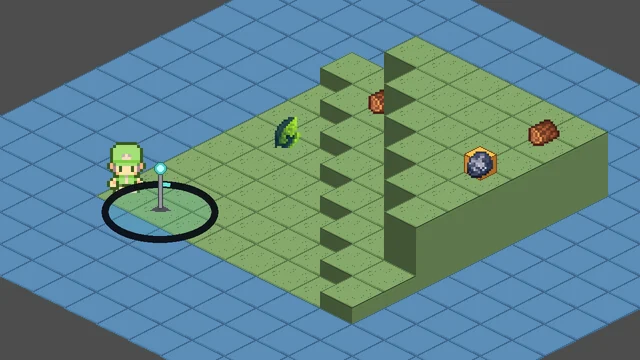
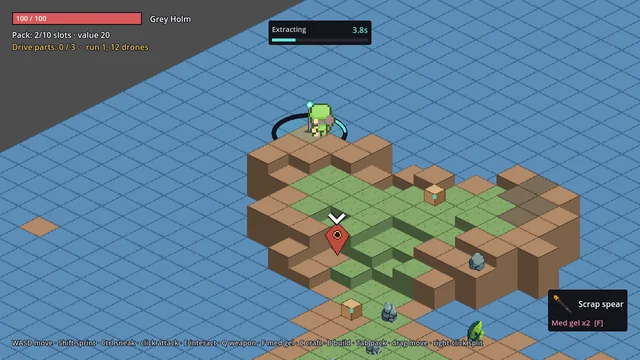
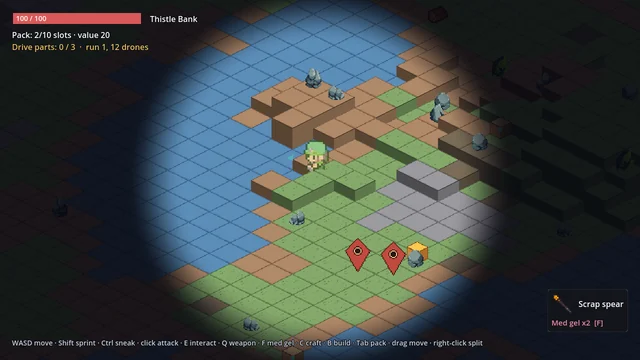
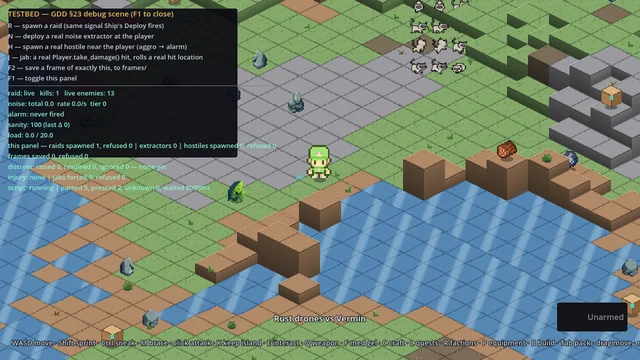
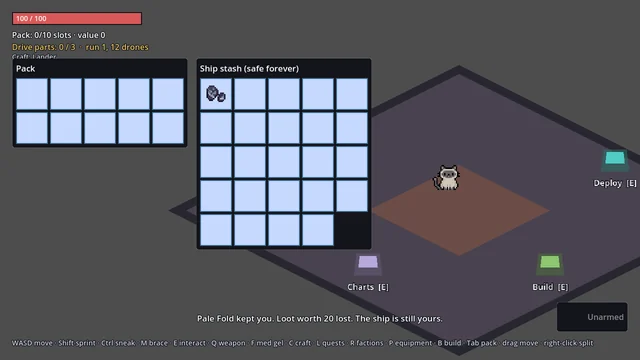
The first version had procedural islands, rust drones, a stash and three drive parts to repair the ship. Most of the screenshots from that month are test fixtures, because that is where the agents spent their time.
There was real engineering in it: fog of war, sneaking by line of sight, an extraction timer and a build system that showed where a structure could and couldn't go. But nobody had decided what it should look like, and nobody had played it from start to finish. The debug panel in the second row was on screen in most frames.
October: playable slices
The restart began with a crash site and one quest: repair the ship. I played the first slice from crash to lift-off in five and a half minutes, and it was the first time the project felt like a game.
From there each slice added one layer. The second added a base and the third added a threat, then my playtest notes turned into work almost daily: four crafting benches, a ship 1.75 times bigger, endless generated worlds, crops, trading face to face, a docking bay and a director that sends robots in waves.
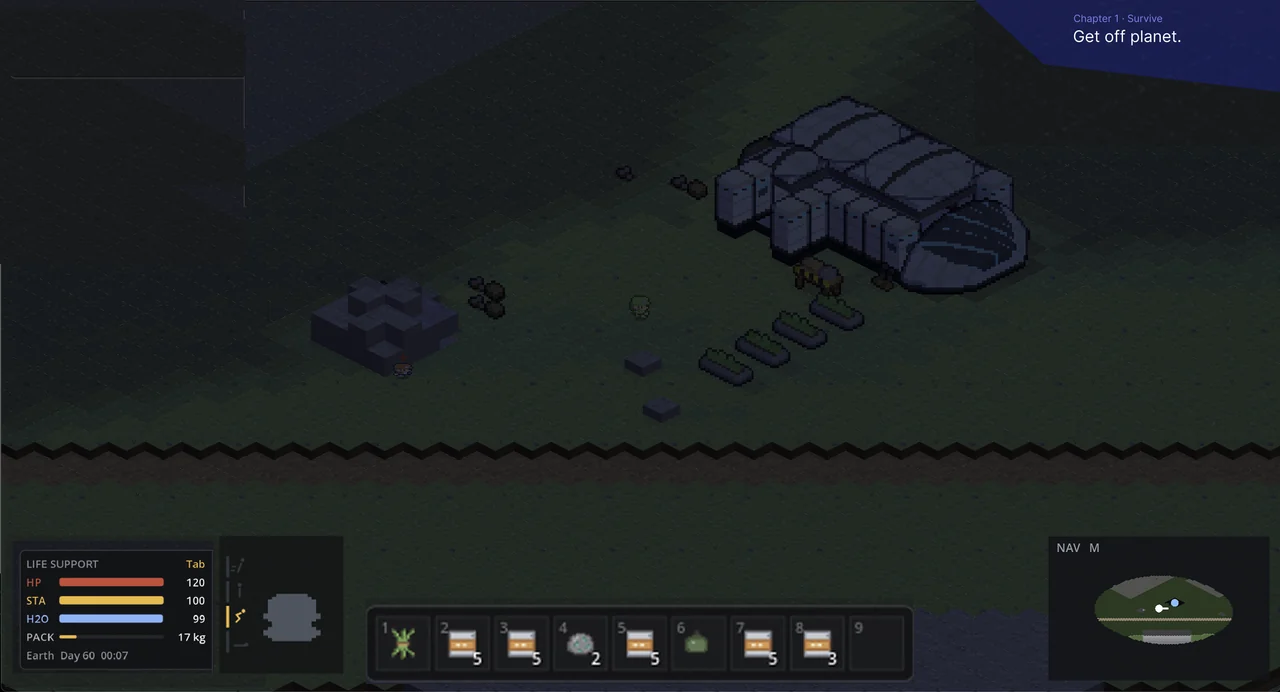
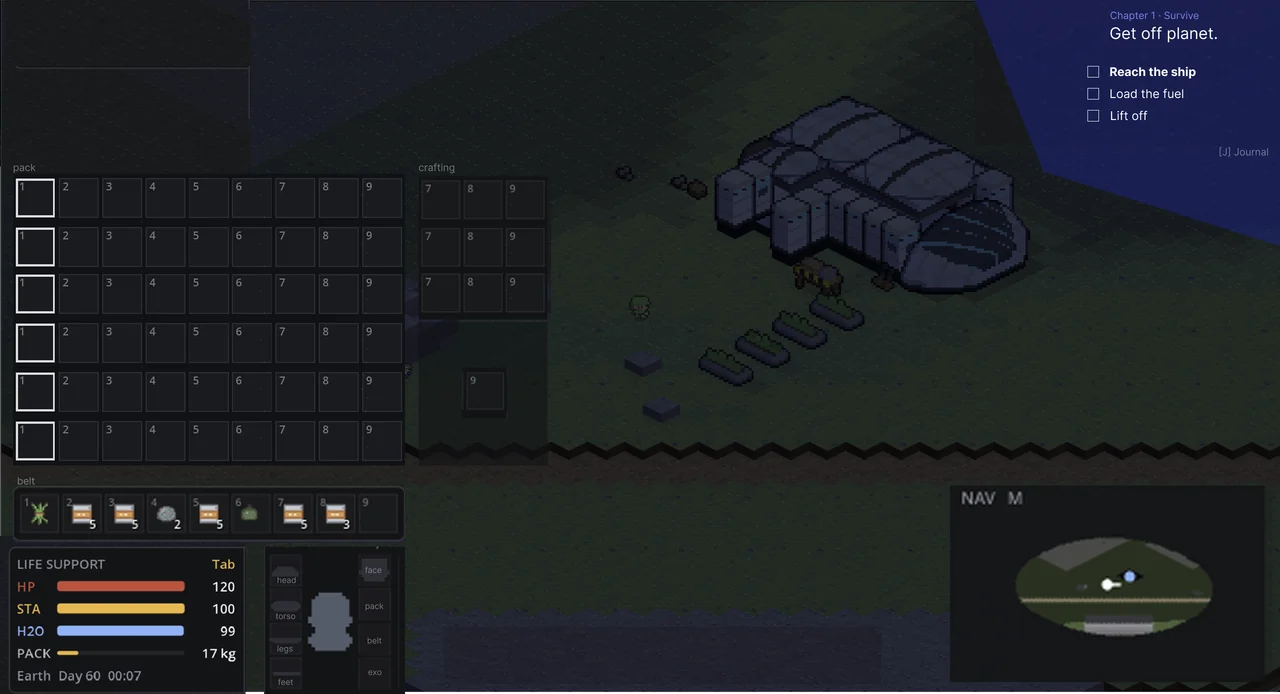
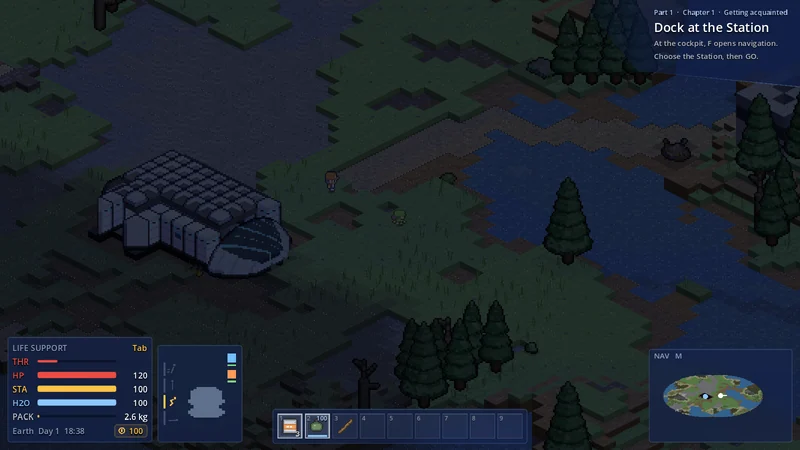
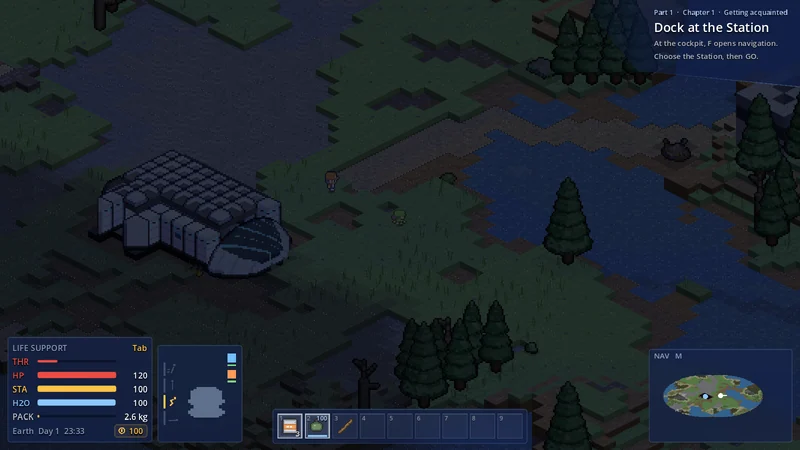
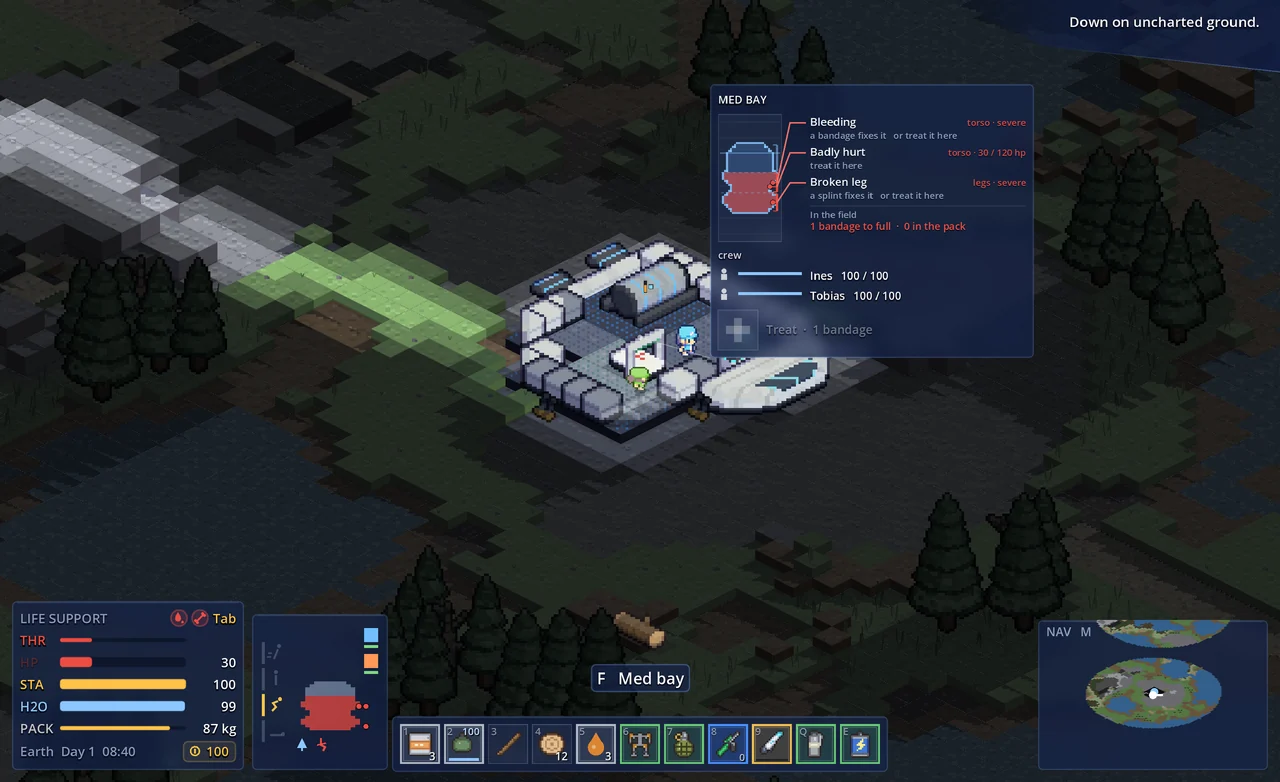
On 12 October I changed direction. Bases were taking attention away from the thing the game is named after, so the ship became the base. You land, you scavenge, you get back to the ship before you die, you sell, you re-gear and you go again, and every so often you lose everything. The interface followed a standard I wrote for the game: panels that float in the world, slot grids, drag and drop, and stats shown as bars. These two frames are the Life Support mock-ups from that standard.
November: where it is now
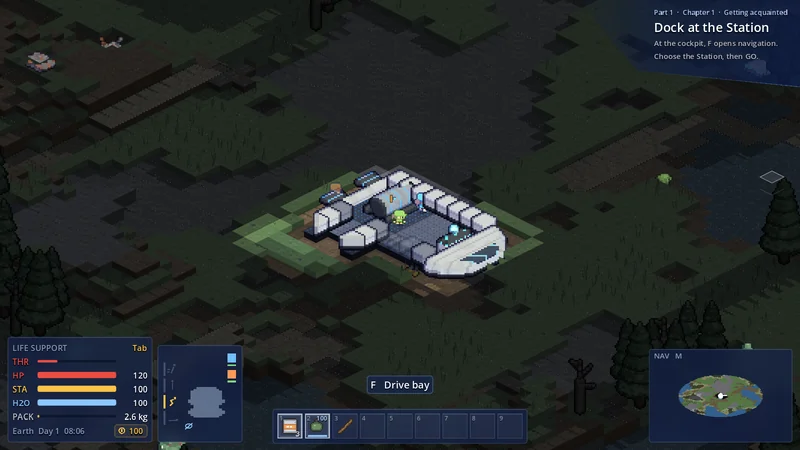
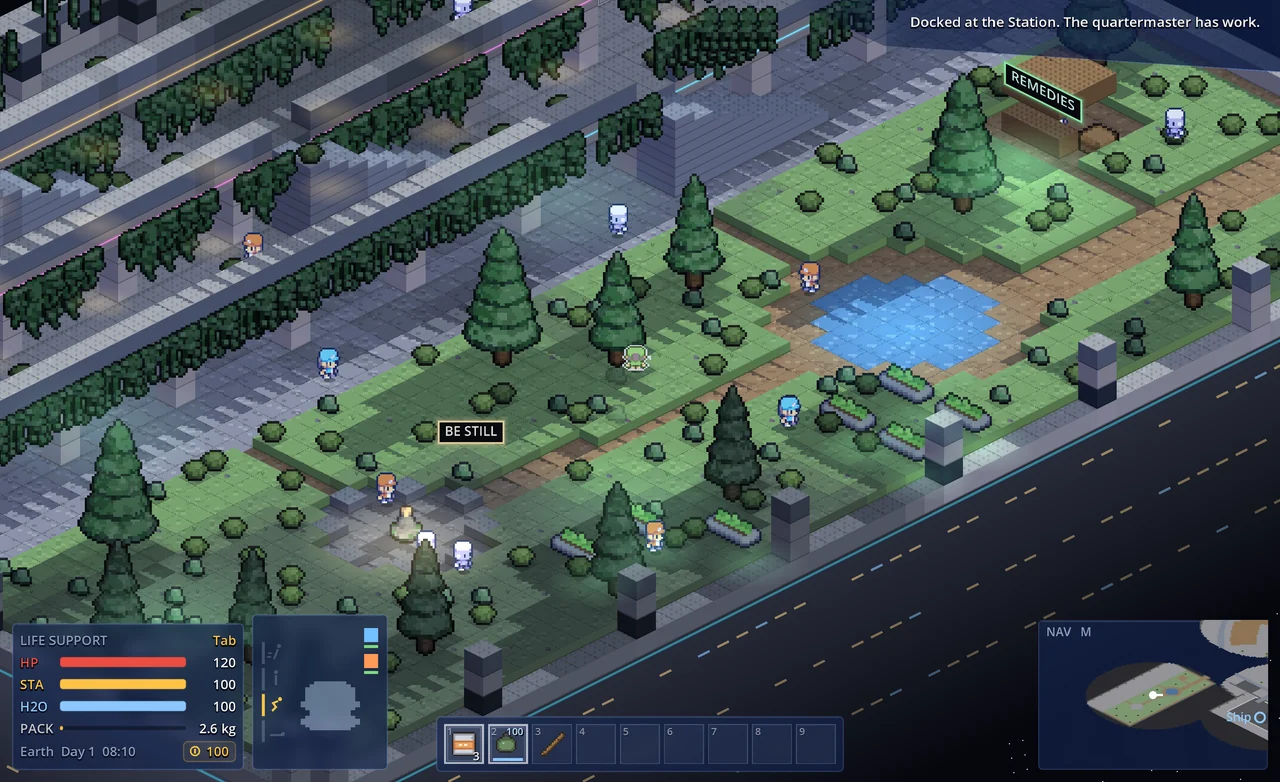
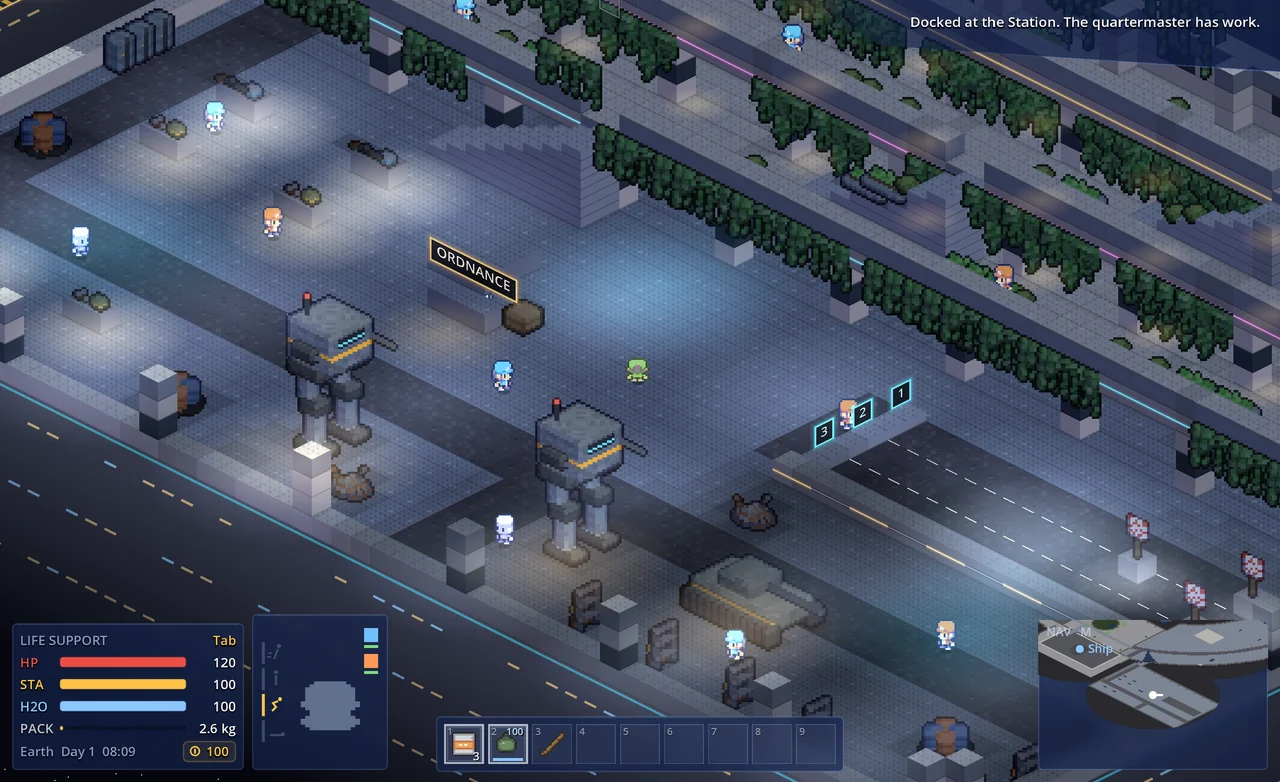
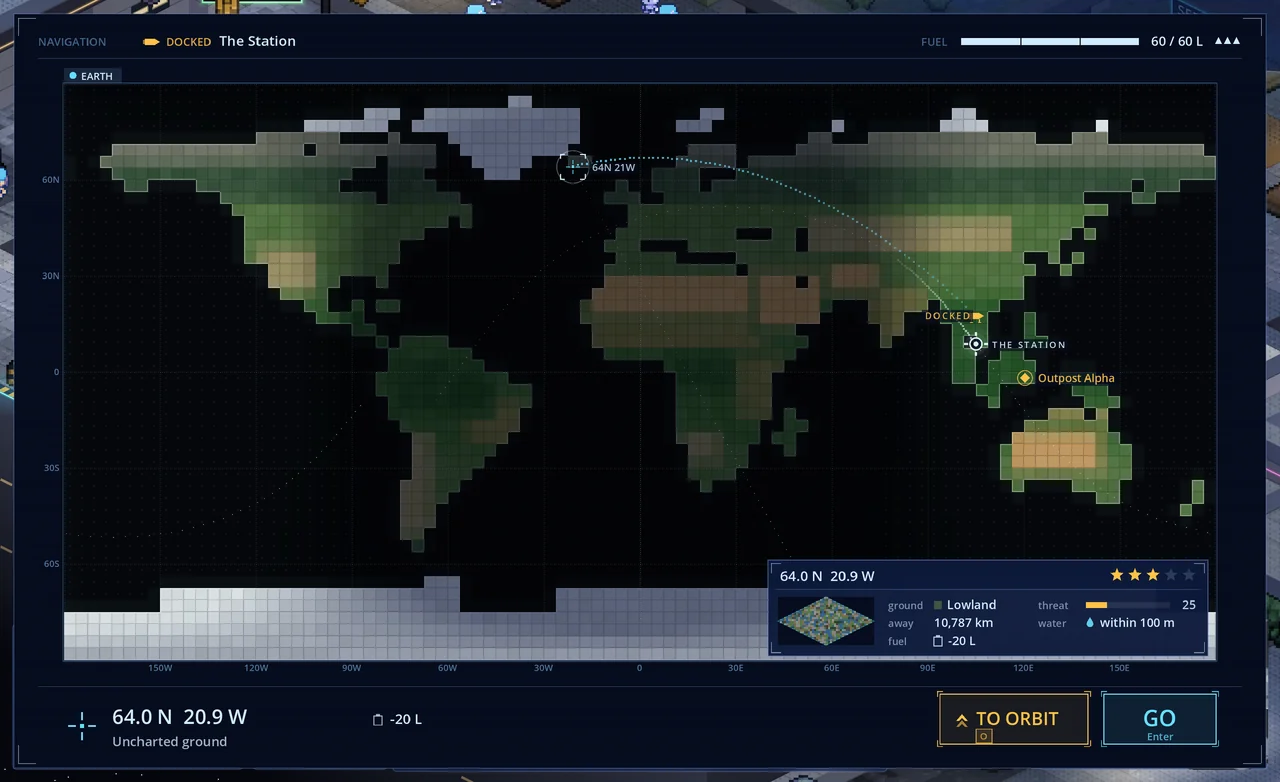
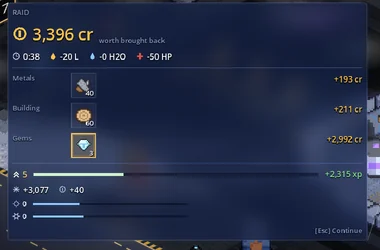
The game now has a Station you can walk around, a ring you can see from space, a world chart for choosing where to land, a crafting tree, rarity, a debrief after each run, and character progression.
I set one rule for this stage: the art will be replaced later, so the work had to improve how the game plays rather than how it looks. One day on Earth lasts 24 real minutes, so the same forest goes from morning to night within a single trip. The clips below were recorded from the current build. The first is a whole raid sped up ten times, played by the bot the agents use to tune the economy: it leaves the Station, lands, explores and comes back to sell.
Devlog
14 Aug
Something with endurance
Two days into the autonomous run I told the agents I wasn't trying to vibe-code a game; I wanted to build something that would last. Two days earlier, the first frame anyone rendered had shown the title font's numbers replaced by a licence watermark, which nobody had noticed.
25 Aug
A series of demos
After my first proper playthrough I told the agents they were producing features without scenes, scenarios, stories or world building, and without a game.
10 Sep
Stopped
Development wasn't improving the experience and every feature was shallow, so I switched the system off and went back to paper.
4 Oct
Slice 1, The Field
A hand-laid map of 300 by 300 metres, one cell to a metre, and the first quest: repair the ship. Crash to lift-off took 5:29. We tried a voxel look the same night and reversed it, because it broke the pixel-art style.
6 Oct
The base and the threat
Slices 2 and 3 in a day. Earth time set to 24 real minutes a day, items grouped by purpose, menus and three save slots.
11 Oct
Making risk worth it
The threat felt real, but the reward didn't yet justify it. Prices were set from my own table, and a bot started playing raids so we could tune them.
12 Oct
Ship first
Bases were dropped and the ship became the base. Robots now arrive in waves, starting with one or two and building to squads, and drive bays come in three sizes. Death has to be punished for a reason, not at random.
13 Oct
It feels good
I slowly built up more gear over a session. I hadn't found any gems yet because I'd been too scared to go far from the ship, which is exactly the tension the game needs.
10 Nov
Progression
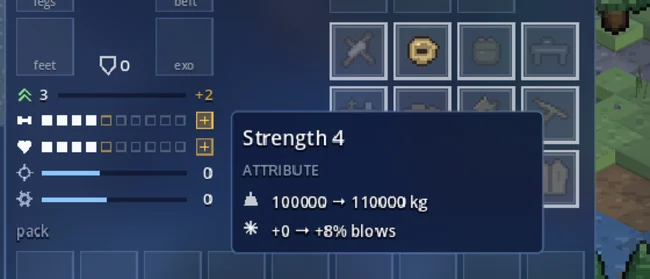
Experience, levels, Strength and Endurance, weapon handling and engineering skills, built from my stats table. Every change shows on screen when it happens, and each card says what the next point buys.
Rules from the design document
The design document is the agreement between me and the agents. These rules were added after the August run, and they're the reason the second version works.
Done means played
A slice starts only when the previous one has been played for thirty minutes and rated in three lines. Passing tests isn't the same as done.
Nothing is out of scope
Every idea gets a slice number instead. Good ideas aren't lost, and they don't derail the slice in progress.
Generalise at the third copy
In August the rule against hard-coding anything produced twenty frameworks and no game. Now the first two versions of anything are written by hand.
The ship never regresses
Bases are temporary and gear is lost when you die, but the ship only improves. It is the thing you're protecting.
Death has a second half
You lose what you carried, but a re-atomiser and a gear scan mean dying costs something without ending the story.
Life Support is the HUD
Health, stamina, water and weight live in one panel that opens into the pack. There are no floating numbers anywhere else.
Hands before weapons
The first weapon is a stick. Sprinting is tiring and carrying is measured in kilograms, so moving well is something you earn.
Draft, don't decide
Numbers the agents invent are listed as placeholders, and any story text they write is marked as a draft. Open questions come to me.